Some ERPs can be self-implemented, most cannot, and the difference is operational complexity — not budget or bravado. If you run a single entity with standard processes, modest transaction volume, and an in-house person who is genuinely good with systems, you can realistically self-implement an accounting platform or a lightweight ERP like Odoo or ERPNext. The moment you add manufacturing, multi-entity consolidation, complex inventory costing, or regulatory exposure, the things you don't know you're missing start costing more than a partner ever would.
This is the honest version: which systems you can take the chance with, where self-implementation quietly goes wrong, and how to tell which side of the line you're on.
What "self-implementation" actually means
Self-implementation means your team configures, populates, tests, and goes live on an ERP without a paid implementation partner. You might still use the vendor's onboarding help, documentation, or community — but nobody who has done this fifty times is sitting across the table catching your mistakes.
That distinction matters, because the value a partner adds isn't typing speed. It's pattern recognition: knowing which decisions are reversible, which ones you'll regret, and what "good" looks like for a business like yours. When you self-implement, you trade that experience for control and cost savings. Sometimes that's a great trade. Sometimes it's the most expensive saving you'll ever make.
Which ERPs you can realistically self-implement
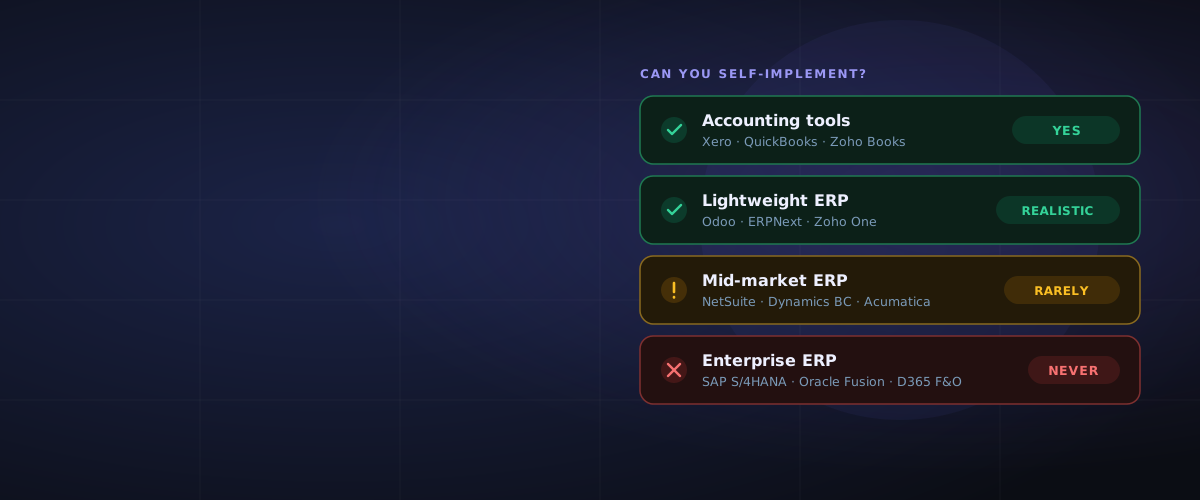
Viability drops sharply as you move up the tiers. Here's the honest map:
| Tier | Examples | Self-implement? |
|---|---|---|
| Accounting / micro | Xero, QuickBooks Online, Zoho Books | Yes — designed for self-serve onboarding |
| Lightweight ERP | Odoo, ERPNext, Zoho One | Realistic — for standard, single-entity operations with an able internal owner |
| Mid-market ERP | NetSuite, Dynamics 365 BC, Acumatica, Sage Intacct, Syspro | Rarely — partner-led by design; DIY is high-risk |
| Enterprise ERP | SAP S/4HANA, Oracle Fusion, Dynamics 365 F&O, JD Edwards | No — never attempt alone |
Two genuinely deserve the "you could take the chance" label:
- Odoo actively markets self-implementation. Odoo Online gives you a hosted environment, and the app-by-app structure means you can start with accounting and sales, then add modules as you grow. A capable operations or finance person can get a simple business live. (For the full picture, see the Odoo buyer's guide.)
- ERPNext is open-source and built for it. If you have technical capability in-house — or use Frappe Cloud to avoid self-hosting — a standard deployment is achievable without a partner. (More in the ERPNext buyer's guide.)
The accounting tools barely count as "implementation" — they're consumer-grade onboarding. The line you're really deciding is lightweight ERP, yes or no.
Which ones you should never attempt alone
Mid-market and up are partner-led for a reason. NetSuite effectively requires a partner or the vendor's own services to configure — its flexibility is also its trap, and an unguided self-implementation produces a mess that costs more to fix than to have done right. SAP, Oracle Fusion, and Dynamics 365 Finance & Operations are enterprise platforms where a botched configuration can take down your ability to invoice or close the books. If your shortlist lives in these tiers, the question isn't "can I self-implement?" — it's "partner or vendor-direct?"
What you'll miss when you self-implement
This is the part that doesn't show up until later. These are the decisions self-implementers get wrong because they don't yet know they're decisions.
1. Chart of accounts design. Your COA is the spine of every report you'll ever run. Self-implementers tend to copy their old structure or accept the default — and discover two years in that they can't get the segmentation a board or auditor wants without a painful restructure. Get this wrong and everything downstream inherits the flaw.
2. Tax and compliance configuration. VAT, withholding, multi-jurisdiction rules, e-invoicing mandates, local statutory formats — these are easy to set up wrong and expensive to discover wrong. A partner who has implemented in your region knows the localisation traps. You'll find them at your first audit or tax filing.
3. Data migration. What you migrate is as important as how. Bringing dirty data, the wrong opening balances, or years of historical clutter into a clean system is one of the most common self-implementation mistakes — and a leading cause of failed go-lives. (This one alone is worth reading the data migration guide.)
4. Process re-engineering — or "paving the cowpath." Self-implementers replicate their existing manual workflows in the new system, broken steps and all. The entire point of an ERP is to improve how work flows, not to digitise the dysfunction. Without someone who has seen better, you rebuild your old problems in a more expensive tool.
5. Permissions, segregation of duties, and internal controls. Who can approve a payment, raise a credit note, or edit a posted invoice? Self-implementations routinely ship with everyone as an admin — an audit failure and a fraud risk waiting to happen. Controls are invisible until something goes wrong.
6. Inventory costing and valuation. FIFO vs weighted average, landed costs, valuation methods — chosen once, hard to change, and quietly wrong for months if you didn't know the question existed.
7. Testing, cutover, and go-live readiness. Experienced implementers run structured testing and a planned cutover — parallel runs, reconciliation, a rollback plan. Self-implementers tend to flip the switch and hope. The gap shows up at month-end.
And the quiet one underneath all of them: you have no benchmark for what "good" looks like. You don't know what you're missing, which is exactly why it's missed.
When self-implementation is the right call
Self-implementation genuinely makes sense when most of these are true:
- Single entity, single currency, one country
- Standard processes — no complex manufacturing or unusual costing
- Modest transaction volume
- A capable internal owner with real time to give the project
- A lightweight platform (Odoo, ERPNext, Zoho One) or accounting tool
- No hard regulatory or audit exposure
- Time to learn, and tolerance for getting some things wrong and fixing them
When several of those flip — multi-entity, manufacturing, tight go-live date, no internal champion, audited financials — the savings evaporate. A failed or messy self-implementation is the most expensive way to "save" on a partner. It's worth remembering that the most common cause of implementation failure isn't the software — it's the decisions around it.
The hybrid path most people should actually consider
The choice isn't binary. The smartest version for a lot of small businesses is self-implement the core, buy expert help for the irreversible parts:
- Configure and run the day-to-day yourself.
- Buy a few days of a consultant's time for the decisions you can't easily undo: chart-of-accounts design, tax setup, data migration sign-off, and a go-live readiness check.
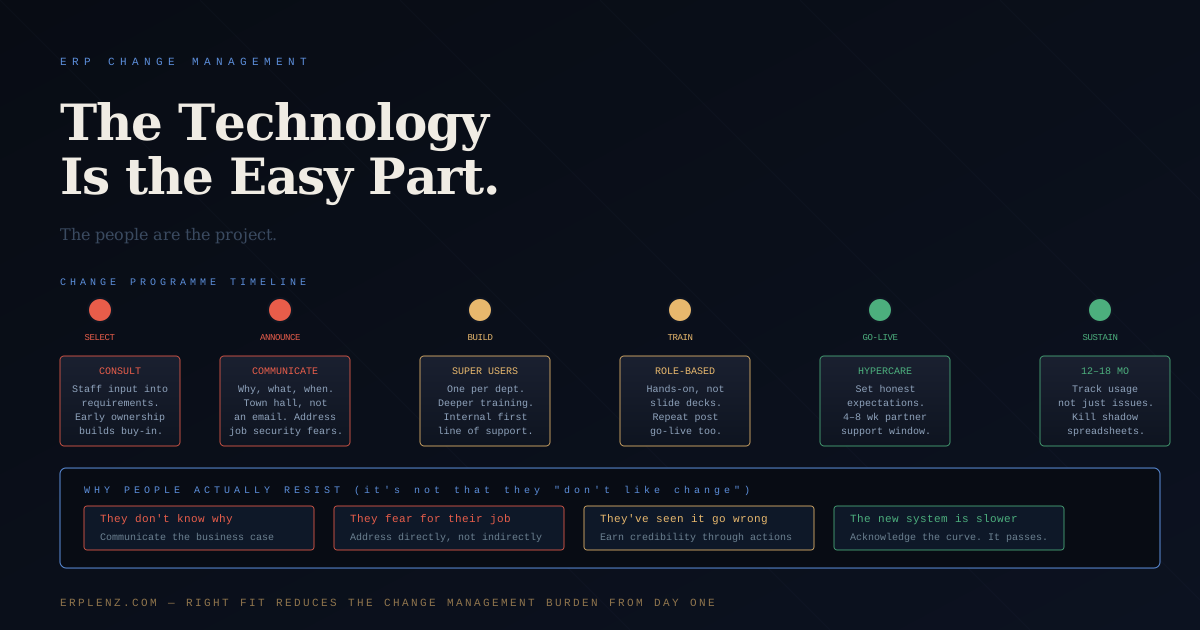
You keep most of the cost saving and control, and you de-risk exactly the decisions that are expensive to reverse. For many businesses that's the genuine sweet spot — far cheaper than a full partner engagement, far safer than going it completely alone. And it pairs naturally with change management, which self-implementers almost always underestimate.
Frequently Asked Questions
Can you implement an ERP yourself without a partner?
Yes — for accounting tools and lightweight ERPs like Odoo, ERPNext, or Zoho One, a single-entity business with standard processes and a capable internal owner can self-implement. Mid-market and enterprise platforms (NetSuite, SAP, Oracle Fusion, Dynamics F&O) are partner-led by design, and self-implementing them is high-risk. The deciding factor is your operational complexity, not your company size.
Which ERP is easiest to self-implement?
Odoo and ERPNext are the most realistic ERPs to self-implement. Odoo offers a hosted, app-by-app structure aimed at self-onboarding, and ERPNext is open-source and built for it (with Frappe Cloud if you don't want to self-host). Accounting platforms like Xero, QuickBooks Online, and Zoho Books are even simpler, though they're closer to guided onboarding than a true ERP implementation.
What do people get wrong when self-implementing an ERP?
The expensive mistakes are the ones that aren't obvious: chart-of-accounts design, tax and compliance configuration, data migration (bringing dirty data or wrong opening balances), internal controls and user permissions, inventory costing methods, and replicating broken manual processes instead of improving them. These rarely surface until month-end close, an audit, or a scale-up — when they're costly to unwind.
Is it cheaper to self-implement an ERP?
Up front, yes — you save the partner's implementation fee, which often exceeds the first-year licence cost. But a self-implementation gone wrong is the most expensive saving there is, because you pay to unpick decisions already baked into your live data. Judge it on total cost over a few years, not the day-one saving. See how much an ERP really costs for the full breakdown.
When should you hire an implementation partner instead?
Hire a partner when you have multi-entity or multi-currency operations, manufacturing or complex inventory costing, regulatory or audit exposure, a tight go-live deadline, or no internal person who can own the project. In those cases the partner's experience prevents mistakes that cost far more than their fee. A middle path — self-implementing the core and buying a few days of help for the irreversible decisions — works well for simpler businesses.
How long does it take to self-implement an ERP?
For a simple single-entity business on a lightweight platform, a focused self-implementation can take a few weeks to a couple of months — but it depends heavily on data quality, how standard your processes are, and how much time your internal owner can dedicate. Expect it to run longer than you plan; see how long ERP implementation takes for realistic ranges.
Not sure whether your operations are simple enough to self-implement — or which platform fits? ERPLenz is a free, vendor-agnostic assessment that scores your business against the right ERP tier and flags the complexity that decides partner-vs-DIY, before any vendor gets involved.